Guide
How to get EPA 608 certified
The complete path to EPA Section 608 certification: who needs it, which type to choose, how the exam works, and what happens after you pass.
If you work on air conditioning or refrigeration equipment for a living, or you plan to, EPA Section 608 certification is not optional. Federal regulation under 40 CFR Part 82 requires technicians who maintain, service, repair or dispose of appliances containing regulated refrigerants to be certified before they do that work. There is no state where this does not apply, no grace period for new hires, and no exemption for working under someone else's supervision when the work itself is yours. The rule attaches to the act of opening a refrigerant circuit, and it follows you onto every job site in the country.
The good news is that the path to certification is short, well defined, and completely within your control. This guide walks the entire road: figuring out whether the rule applies to you, choosing the right certification type for the equipment you touch, understanding exactly how the exam is built, weighing the closed-book proctored format against the mail-in option for Type I, and knowing what to expect after you pass. None of it is complicated, but there is a right order to do it in, and a few decisions along the way that are easy to get wrong if nobody explains them. Read this once, top to bottom, and you will know exactly what you are signing up for.
Who actually needs 608 certification
The regulation defines a technician as anyone whose work could reasonably be expected to violate the integrity of the refrigerant circuit. That one phrase does all the heavy lifting, so it is worth unpacking. The refrigerant circuit is the sealed loop that carries refrigerant through the compressor, condenser, metering device and evaporator. If your work could open that loop, cut into it, attach gauges to it, recover refrigerant from it, or otherwise create a path for refrigerant to escape, you are a technician in the eyes of the EPA and you need to be certified before you do the work.
In plain terms: if you connect a manifold gauge set, braze or cut a refrigerant line, replace a compressor or a filter drier, recover refrigerant ahead of a repair or a disposal, or charge a system, the definition covers you. It does not matter whether you are an apprentice, a helper, a maintenance tech at an apartment complex, a facilities engineer, or the owner of the company. The trigger is the work, not the job title, the seniority, or who signs the paycheck. If the work could reasonably breach the circuit, the person doing it needs the card.
The flip side matters just as much. Work that cannot reasonably be expected to breach the sealed system does not require certification. Changing air filters, washing condenser coils from the outside, swapping a thermostat, replacing a contactor or a capacitor, and running sheet metal are all outside the definition, because none of them open the circuit. Plenty of people in the trade do useful, skilled work for years without a 608 card. But the moment your role grows toward sealed-system work, get certified first, not after. Doing circuit work without certification puts you and your employer on the wrong side of a federal rule.
The venting prohibition applies to everyone
Knowingly releasing regulated refrigerant while maintaining, servicing, repairing or disposing of equipment is prohibited regardless of who you are or what card you hold. The only exception is de minimis release that occurs during a good-faith effort to recover the refrigerant.
Step one: choose your certification type
Section 608 splits certification into three equipment classes plus one combined credential, and your first real decision is which one to sit for. Type I covers small appliances, defined as factory-sealed units containing five pounds or less of refrigerant. Type II covers medium-, high- and very high-pressure appliances. Type III covers low-pressure appliances. Universal certification covers all three classes in a single credential. Each certification permits you to open the refrigerant circuit only on the class of equipment it covers, so the choice is not cosmetic. It defines the boundary of what you are allowed to work on.
Which one you need depends entirely on the equipment your work puts in front of you. A tech who only handles domestic refrigerators, window units and other small factory-sealed systems can operate on Type I alone. A residential or light commercial HVAC tech working on split systems and packaged equipment needs Type II. A tech who services low-pressure chillers needs Type III. If your work spans classes, or might someday, you need every type your work touches, and at that point the combined credential starts to make obvious sense.
For most people entering the trade, the practical answer is Universal. The Universal exam combines the Core section with all three sector sections in one sitting, and holding it means you never again have to stop and ask whether a piece of equipment falls inside your credential. We cover the decision in depth in our type-selection guide, but the short version is this: if you are unsure which type you need, that uncertainty is itself the argument for Universal. The people who correctly choose a single type are the people who know with confidence that their work will stay inside one equipment class.
One boundary case is worth knowing before you register. Equipment classed as an MVAC-like appliance requires either Type II certification under Section 608 or certification under the motor vehicle air conditioning program. If your work touches refrigeration or air conditioning mounted on vehicles or similar equipment beyond ordinary passenger cars, check how the equipment is classified before you pick an exam, so you do not sit the wrong test for the work you actually do.
How the exam is structured
Every 608 exam is built from the same published blueprint, set out in Appendix D of the regulation, and knowing the blueprint takes most of the mystery out of the test. Each Type exam consists of 25 Core questions, which the regulation calls Group I, plus 25 sector-specific questions, called Group II. Sit for Type II, for example, and you answer 25 Core questions and 25 questions specific to medium- and high-pressure equipment, 50 questions in total. The same shape holds for Type I and Type III: the shared Core, then the material for that equipment class.
The Universal exam is 100 questions: the same 25 Core questions plus 25 questions for each of the three Types. You are not taking three separate exams on three separate days. It is one sitting, one longer test, covering the Core once and each sector once. That structure is exactly why Universal is efficient: the Core section you would have to study for any single type is the same Core section that anchors the full exam.
The Core section is shared across every certification level, and it covers the ground every technician is expected to know regardless of specialty: the environmental impact of CFCs, HCFCs and their substitutes, the laws and regulations that govern refrigerant handling, and the changing outlook of an industry in which older refrigerants are being phased down and replaced. If that sounds like background material, it is, but it is background the regulation says every certified technician must hold, and the exam enforces it.
The Group II sector sections get into the working material for each equipment class: leak detection, recovery techniques, safety, shipping and disposal. This is the practical knowledge of the trade as it applies to that class of equipment, and it rewards people who have been around the equipment or who study the sector material deliberately. If the Core is the why of refrigerant regulation, Group II is the how of doing the work without venting, without injury, and without breaking the rules that follow the refrigerant from the appliance to its final destination.
- Each single Type exam: 25 Core questions plus 25 sector questions, 50 total
- Universal exam: 100 questions in one sitting, the 25 Core plus 25 for each of the three Types
- Core covers environmental impact of CFCs, HCFCs and substitutes, laws and regulations, and the industry outlook
- Sector sections cover leak detection, recovery techniques, safety, shipping and disposal
- Passing score on closed-book proctored exams: 70 percent
- Mail-in Type I format: 84 percent required to pass
Closed-book, proctored, and the mail-in Type I trade-off
Type II, Type III and Universal exams are closed-book and proctored. You sit them through an EPA-approved certifying organization with no notes and no reference material, and you need 70 percent to pass. That is the standard path, and for those three credentials there is no alternative format. The closed-book condition is worth taking seriously when you plan your study: everything you need has to be in your head on exam day, because nothing else is allowed in the room with you.
Type I is the exception. The regulation allows a mail-in format for Type I in addition to the standard proctored test, and it prices the convenience in points: the mail-in format requires 84 percent to pass, while the closed-book proctored test requires 70 percent. Same certification at the end, different bar depending on the format. That is the whole trade-off, and it is stated plainly in the regulation rather than left to the certifying programs to invent.
So which should you take? If Type I is genuinely all you will ever need and getting to a proctored sitting is impractical where you live or work, the mail-in route exists for exactly that situation. But be honest about what an 84 percent standard means: the margin for error shrinks hard, and many people find that preparing to an 84 percent bar takes about as much work as preparing for a proctored test at 70. And if there is any realistic chance your career moves toward split systems, packaged units or larger equipment, skip the question entirely and sit a proctored exam for Type II or Universal. Nobody regrets holding the broader credential.
Where the exam is given
Exams are administered by EPA-approved certifying organizations. These programs operate under the agency's approval, follow the question structure and passing standards fixed in the regulation, and are permitted to charge reasonable fees for administering the test. Trade schools, industry associations, supply houses and proctoring providers are the common places to find a sitting. The credential is federal either way: a 608 certification earned through any approved program is valid on any job in any state, and no program's card outranks another's.
When you pick a program, confirm two things before you register. First, that the organization is EPA-approved for the certification type you want to sit. Second, how it actually delivers the exam, because scheduling, location and administrative details vary from program to program even though the exam content and the passing bar come straight from the regulation. Ask the questions up front and the process is boring in the best way.
What happens after you pass
The regulation puts deadlines on the back end of the process so you are not left hanging. Certifying programs must provide your results within 30 days, and your wallet card, the physical proof of certification you carry on the job, within 30 days as well. In practice that means the gap between sitting the exam and holding the card is bounded, and if a program blows past those windows you are entitled to ask why.
Keep the card, and keep track of it. Employers ask for it when they hire you, refrigerant sellers can ask for it when you buy, and an inspector can ask for it on a job. If you lose it, your certifying organization is the source for a replacement, so keep a record of which organization certified you and when you passed. A photo of the card stored somewhere safe costs nothing and saves a headache later.
Does 608 certification expire?
Here is the fact that surprises almost everyone: the regulation sets no expiration or renewal requirement for technician certification. There is no federal renewal cycle, no continuing education mandate in the rule, and no requirement to retest on a schedule. A 608 credential does not lapse with time under the regulation, which is part of why the exam is worth doing properly once rather than treating as a box to scrape past.
That said, treat any claim about renewal with a little care. If a program, an employer or a website tells you your card must be renewed, confirm the claim with your certifying program before you pay anyone or sit for anything. The regulation is the baseline, and on the question of expiration it is silent. Anything beyond that baseline is worth verifying at the source rather than taking on faith.
The obligations that come with the card
Certification is a license to do the work, and the work carries standing obligations that do not end when you pass. The venting prohibition is the big one: knowingly releasing regulated refrigerant while maintaining, servicing, repairing or disposing of equipment is prohibited. The only exception is the de minimis release that occurs while you are making a good-faith effort to recover the refrigerant. Recover first, every time, and the exception exists to cover the small losses that honest recovery cannot avoid, not to excuse shortcuts.
Recordkeeping is the other standing duty. Records required under the regulation are generally kept for a minimum of three years, and owners of appliances holding 50 or more pounds of refrigerant must keep servicing records for that equipment. If you service large systems, expect to be part of that paper trail whether or not you own the appliance, because the service you perform is what those records document. Good habits here protect you as much as they satisfy the rule.
The whole path, start to finish
- Confirm your work meets the technician definition: could it reasonably be expected to violate the integrity of the refrigerant circuit?
- Pick a certification type based on the equipment you service, and default to Universal if there is any doubt
- Find an EPA-approved certifying organization and register for the exam format you want
- Study the Core material first, then the sector material for your type, to a closed-book standard
- Sit the closed-book proctored exam and score 70 percent, or the mail-in Type I format at 84 percent
- Receive your results within 30 days and your wallet card within 30 days
- Carry the card, recover refrigerant in good faith every time, and keep required records for at least three years
That is the whole road. There are no shortcuts, but there is also no mystery: the exam structure is published in the regulation, the passing bar is fixed, the certifying organizations are approved against a federal standard, and the credential does not expire under the rule. Put in the study time, sit the test once, do it right, and get back to work with a card that follows you for the rest of your career.
Ready to see where you stand? Take a practice exam now.
The 608 fact sheet
One printable page: the four certification types, the exam structure, the leak-rate and recovery numbers, all cited to the regulation. Free.
No spam. One useful sheet and occasional notes.
The tools of the certified tech
 Elitech digital manifold setThe gauge set is the trade's daily instrument
 VIVOHOME 4CFM vacuum pumpEvacuation is half of what 608 regulates
 VEVOR recovery machineRecovery is the other half
 Fieldpiece DR58 leak detectorLeak detection is a Group II exam area
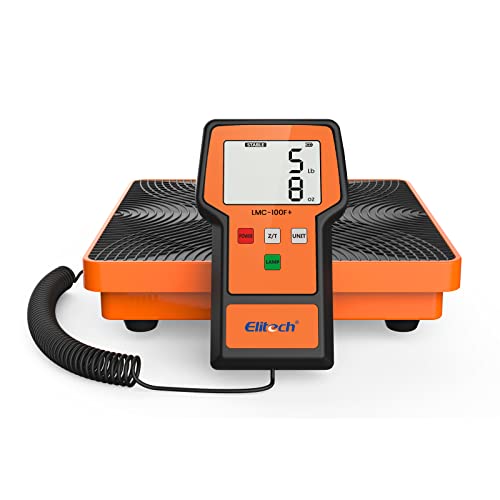 Elitech refrigerant scaleCharge tracking runs on the scale
Certification is the legal floor; these are the working instruments beside it. The full kit page.