Guide
A working day in HVAC
A composite service day from the morning board to the drive home: the diagnosis discipline, the parts run, the midday attic, honest customer conversations, and the way EPA 608 rules shape the workflow at the recovery machine.
What follows is a composite, not a diary. No single technician lives this exact day, and no real person appears in it. It is assembled from the shape service days actually take across the trade: the rhythm of the dispatch board, the discipline of diagnosis, the physics of an attic at midday, the awkward honesty of a repair-or-replace conversation, and the federal rules that govern what happens the moment a refrigerant circuit gets opened. If you are considering HVAC work, this is the texture the brochures leave out, including both the parts that keep people in the trade for decades and the parts that send others out after their second summer. Read it as a fair test rather than a recruitment pitch.
The day described here is a summer service day on the residential side, because that is where most technicians start and where the trade shows its character fastest. The seasonal differences and the install-day alternative get their own sections near the end, because a career in this trade is really a rotation through all of them.
The morning board
The day starts at the shop before the heat does. Trucks in a row, techs filtering in with coffee, and the dispatch board, which nowadays is usually a tablet screen, already stacked with calls that came in overnight. During a hot stretch the board is a triage document. No-cool calls outrank maintenance visits. Households with elderly occupants or medical situations move to the front. Maintenance agreements, the tune-ups sold in the shoulder seasons, get pushed to whatever slack the day turns out to have, which during a heat wave is none. The dispatcher's job all day will be rearranging this list as new emergencies land on it, and every tech knows the morning version of the schedule is a work of fiction by mid-morning.
Before rolling, a few minutes of personal logistics that veteran techs never skip: checking yesterday's tickets for any callback risk, confirming the truck actually carries the common failure parts for the equipment brands in today's neighborhoods, topping off the water jug because the attic will not forgive forgetting it, and glancing at the first address to think about what the equipment out there probably is. A service truck is a rolling parts shelf and workshop, and the difference between a one-visit fix and a two-visit fix is often whether the right capacitor or contactor is already in the bins. Restocking discipline is unglamorous and it is also the quiet backbone of a productive day.
First call: the no-cool
The first address is a house where the air conditioning quit the evening before. The homeowner meets you at the door and the house is already warm behind them. The first tool used on any call is not a meter, it is listening. When did it stop. Did it stop all at once or fade over days. Any new noises before it quit, any breakers found tripped, any work done on the system recently, any rooms that were always warmer than the rest. The history is diagnostic data, and customers almost always know more than they think they do. Two minutes of questions at the door regularly saves twenty minutes of instrument work, and it also tells the customer they are being taken seriously, which will matter later when the findings arrive.
Then the discipline, and discipline is the right word. The great temptation in service work is the early guess: jumping at the first plausible cause, replacing a part on suspicion, and hoping. Good technicians resist it with a sequence. Confirm the simple and the cheap first, because thermostats, filters, tripped float switches, and breakers produce a healthy share of no-cool calls and cost almost nothing to rule out. Then move outward with instruments: what the air handler is doing, what the temperatures across the coil say, what the condenser outside is doing when it is told to run, what the electrical measurements at the contactor and capacitor actually read against their ratings. Symptoms suggest hypotheses, measurements confirm or kill them, and nothing gets replaced without a reading that condemns it. That sequence, boring as it sounds, is the entire difference between a diagnostician and a parts-swapper, and it is the skill the trade ultimately pays for.
On a composite summer day, the first call resolves the way a large share of them do: a failed component in the condenser circuit, identified by measurement, swapped from truck stock, and verified by watching the system start correctly and the temperatures come back in line. Verification is part of the discipline too. The job is not done when the part is in; it is done when the measurements say the system is doing its job and will keep doing it. A short explanation to the homeowner of what failed and what was measured, the paperwork, the payment conversation, and the truck is rolling again. The board has already changed twice since the morning.
The parts run
Not every call ends in truck stock, and the second one does not. The needed part is not in the bins and not something worth improvising, so the route now includes a supply house. This is the unglamorous connective tissue of the trade that no one mentions in career materials: the drive across town, the counter line with three other techs from three other companies all mid-crisis, the part that is in stock at the second branch but not the first, the dispatcher recalculating the afternoon around the detour. Techs eat lunch in the truck on days like this, and the relationships at the supply house counter turn out to be genuinely valuable professional capital. The counter staff who will check the back for you, or call the other branch before you drive there, are worth more than they are ever paid.
The attic at midday
The early afternoon call is the one that defines the trade's physical reputation: an air handler in an attic, at the hottest part of the day, in a heat wave. The honest version is this. An attic under summer sun is dramatically hotter than the outdoor air, the equipment is rarely near the hatch, and the path to it is a crouched walk across joists under low rafters with insulation grabbing at every step. The work happens kneeling or bent, by headlamp, with sweat running into your eyes, handling tools and panels that are themselves hot to the touch. Experienced techs work attics in short shifts with deliberate breaks below, drink water on a schedule rather than by thirst, and stage every tool before climbing so no trip is wasted. None of this is exaggeration and none of it is hazing. It is the ordinary cost of the fact that this is where builders put the equipment.
It deserves saying plainly that heat stress in enclosed spaces is a real hazard, not a toughness test. The techs who last decades are the ones who pace themselves, watch for the early signs in themselves and their helpers, and are willing to tell a customer that a non-emergency attic job is getting finished at first light instead of at the peak of the afternoon. The body is the tool the whole career runs on, and the trade's veterans treat it that way with complete seriousness. Anyone romanticizing the misery, or pretending it does not exist, is selling something. The attic is also, for what it is worth, where a lot of techs privately decide whether this trade is theirs. It is honest work in honest conditions, and it is not for everybody.
The attic is the interview
Reading about attic heat and experiencing it are different things. Before committing to training, spend a summer as a helper if you possibly can. A single season on a truck answers the physical question with an authority no article can match.
The customer conversation
The attic call ends with the day's hardest task, and it is not mechanical. The system is old, the failed component is replaceable, but the measurements tell a larger story about a machine near the end of its life, and the homeowner is about to hear options they were not budgeting for. This conversation is a skill equal to any diagnostic one. The honest structure is to present the real choices with their real tradeoffs: the repair that gets cooling back today and what it does not fix, the likelihood and general nature of what fails next on a system this age, and the replacement path with its costs and its benefits, all delivered without manufactured urgency and with a genuine willingness to do whichever one the customer chooses. The customer cannot verify the diagnosis themselves. The entire transaction runs on trust, which means the trade, at the individual level, runs on integrity.
The ethics deserve their own paragraph because the pressure is real. Some shops set sales quotas for technicians and coach urgency, and every tech eventually feels the pull of a commission structure leaning on their recommendation. The line that honest techs hold is simple to state: recommend what the measurements support and what you would tell a relative to do, disclose the tradeoffs both directions, and never invent a danger to close a sale. A legitimate upsell exists, and plenty of them serve the customer well; a manufactured one is a betrayal of the only asset a service company actually has. Technicians choosing employers should ask directly how the shop pays for replacements sold, because the answer describes the pressure they will live under every afternoon like this one.
The recovery machine, and why 608 shapes the day
One call on the composite board requires opening the refrigerant circuit itself, and this is where the day's workflow stops being merely practical and becomes regulatory. Refrigerant cannot legally be vented to the atmosphere, so before the sealed system is opened, out comes the recovery machine, the recovery cylinder, the scale, and the hoses. The refrigerant is pulled from the system and captured, the quantities are tracked, and only then does the mechanical work proceed. Afterward comes leak-checking and evacuation before the system is charged again. None of that sequence is optional, none of it is regional custom, and all of it takes real time on real calls, which is why the recovery machine has a permanent place on the truck and in the day's arithmetic.
This is exactly the territory that EPA Section 608 governs, and it is why the certification is not an abstract exam requirement but a description of the daily workflow. Under the federal rule, anyone whose work could reasonably be expected to affect the refrigerant circuit of an appliance must be certified, which in practice means essentially every technician on the cooling side of the trade. The exam itself is 25 Core questions plus 25 questions for each certification type, closed book, with 70 percent required to pass, and the regulation sets no expiration on the credential once it is earned. What the exam actually tests, recovery practices, handling rules, and the reasoning behind them, is what the technician physically does at the machine on days like this one. Study for it with that in mind and the material stops feeling like trivia, because it is a preview of the job.
Seasons change the day
The composite above is a summer day, and summer is the trade at maximum intensity on the cooling side: an overflowing board, triage all day, long evenings, and on-call rotations that own the weekends while the heat lasts. Winter mirrors it with the furnaces and heat pumps: no-heat calls carry the same urgency in the other direction, and the workspaces flip from attics to rooftops and cold crawlspaces, with wind replacing heat as the antagonist. The shoulder seasons in between are the trade's deep breath. The board fills with maintenance agreements and tune-ups instead of emergencies, hours turn predictable, training and certification study fit into real evenings, and shops catch up on installs that customers deferred during the crunch. A year in HVAC has a shape, and technicians plan their lives around it the way farmers plan around harvest.
Install days versus service days
Not every day in the trade is a service day, and the difference is temperament-defining. An install day, most commonly a changeout replacing an old system with a new one, is known scope executed with a crew: recover the refrigerant from the old equipment, demo it out, set the new equipment, braze the line set, pressure test, evacuate, charge, and commission until the measurements prove the system is doing what its paperwork promises. It is physically demanding in a different way, more lifting and less crawling, and it ends when the job is commissioned rather than when the board is empty. There is a deep satisfaction in leaving behind a completed, working system that did not exist that morning.
A service day is the opposite animal: unknown scope, mostly solo, a rolling sequence of small mysteries with a customer attached to each one. Some technicians love the diagnostic hunt and find install work repetitive; others love the crew rhythm and the defined finish line and find service days chaotic. Most shops need both, many techs rotate through both across a career, and the skills feed each other, because the best diagnosticians understand how systems go in and the best installers understand how they fail. Someone deciding on the trade should know which shape of day sounds like theirs, while staying open to being surprised in the field.
| Service day | Install day | |
|---|---|---|
| Scope | Unknown until diagnosed, call by call | Defined job, planned in advance |
| Company | Mostly solo with customer contact all day | Crew work with a shared finish line |
| Core skill | Diagnosis under pressure, communication | Craftsmanship, sequence, and stamina |
| Rhythm | Triage board, constant rescheduling | One job carried through to commissioning |
| Satisfaction | The mystery solved, the house cooling again | The finished system that was not there at dawn |
The drive home, and what the day adds up to
The composite day ends back at the shop or straight home from the last call: tickets closed out, the truck restocked for the morning, tomorrow's board already filling with the afternoon's new calls, and, in season, the on-call phone either handed off with relief or accepted for the night. Add up what the day demanded and the list is striking in its range. Mechanical and electrical reasoning under time pressure. A body willing to work in the worst spaces on the worst days. The people skills to deliver unwelcome news kindly and honestly several times before dinner. And a working fluency in federal refrigerant rules that shaped the workflow at every opened circuit. Very few jobs ask for all four at once, which is either the trade's burden or its appeal, depending entirely on the reader.
If the diagnosis paragraphs pulled you forward and the attic paragraph did not push you away, that combination is the most reliable signal this composite can offer that the trade deserves a serious look. The gateway to all of it, the credential that makes every refrigerant-touching version of this day legal to work, is EPA 608 certification, and the exam is thoroughly learnable with focused study. A sensible next step costs nothing: take a practice exam, see how the Core material sits with you, and measure the distance between where you stand and the passing score. The day described above belongs to people who started exactly there.
See where you stand: take the free EPA 608 practice exam
The 608 fact sheet
One printable page: the four certification types, the exam structure, the leak-rate and recovery numbers, all cited to the regulation. Free.
No spam. One useful sheet and occasional notes.
The tools of the certified tech
 Elitech digital manifold setThe gauge set is the trade's daily instrument
 VIVOHOME 4CFM vacuum pumpEvacuation is half of what 608 regulates
 VEVOR recovery machineRecovery is the other half
 Fieldpiece DR58 leak detectorLeak detection is a Group II exam area
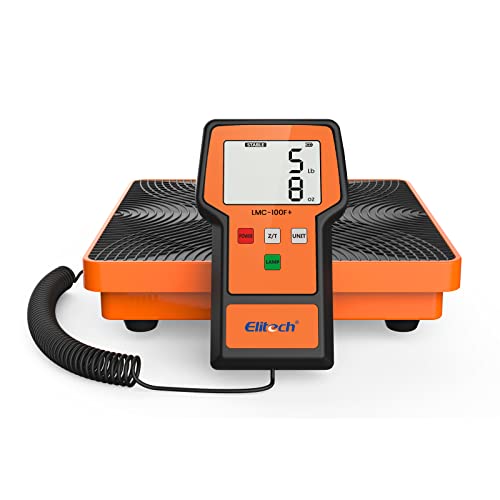 Elitech refrigerant scaleCharge tracking runs on the scale
Certification is the legal floor; these are the working instruments beside it. The full kit page.