Guide
What HVAC techs actually earn
The Bureau of Labor Statistics figures on HVAC pay with full attribution, the job outlook and the forces driving it, the levers that move an individual technician's income, and an honest accounting of what the money costs.
Ask what HVAC technicians earn and you will get a different answer from every direction. Recruiting ads quote the best week a senior tech ever had. Trade school marketing rounds everything up. Online forums skew toward the frustrated, because content people rarely post. Meanwhile the person actually considering the trade, the one deciding whether to spend a year of life and a tuition bill on it, needs a number that can be trusted and a framework for what that number actually means. This article is built on the one dataset with no sales agenda: the Bureau of Labor Statistics Occupational Outlook Handbook, using its 2025 data for heating, air conditioning, and refrigeration mechanics and installers. Every figure below comes from that source and is attributed to it, and everything the BLS does not measure is explained qualitatively, so you always know which claims carry federal statistics behind them and which are the trade's accumulated common knowledge.
The plan is simple. First, the verified national numbers and what they do and do not mean. Second, the official job outlook and the forces actually driving it. Third, the levers that move one technician's income above or below the midpoint, because the midpoint itself is not a destiny. And fourth, an honest accounting of what the money costs, because the paycheck and the physical toll are two halves of the same deal and reading only one column is how people end up regretting the choice in either direction.
The national numbers, straight from the BLS
The Bureau of Labor Statistics reports that heating, air conditioning, and refrigeration mechanics and installers earned median pay of $61,010 per year in 2025, which works out to $29.33 per hour. Median means the midpoint: half of the technicians in the country earned more than that figure and half earned less. It is not an average dragged upward by a handful of outliers, and it is not an entry wage. It is the middle of the entire distribution, from the first-year helper carrying ladders to the thirty-year commercial specialist, which makes it the most honest single number available and also a number that describes almost nobody exactly. Treat it as a reference point, not a quote.
The same BLS data counts 440,900 jobs in the occupation. That scale matters more than it first appears. A trade with hundreds of thousands of positions is not a boutique niche where you must relocate to one of three metro areas to find work. Heating and cooling equipment exists nearly everywhere people live and work, so the jobs are distributed roughly the way the population is distributed. Wherever you are, or wherever you want to end up, some share of those 440,900 jobs is within driving distance, and none of the work can be shipped overseas or performed remotely. The equipment is bolted to the building, and a certified human being has to stand in front of it with instruments and tools. That structural fact is worth more than any single year's statistics.
The BLS also describes how people typically enter the occupation: the typical entry-level education is a postsecondary nondegree award, paired with long-term on-the-job training. Translated out of statistical language, that means a certificate program at a trade school or community college rather than a four-year degree, followed by years of learning the craft on trucks and in mechanical rooms while being paid to do it. The economic consequence is large. The runway from decision to first paycheck is short, the tuition bill is a fraction of a degree, and the deepest part of the education happens on an employer's clock instead of yours. The long-term on-the-job training label also tells you something the marketing brochures will not: the school gets you hired, and the trade itself takes years to learn on the other side of the hiring.
What the median cannot tell you is where you personally will sit. A single midpoint compresses an entire career arc and every branch of the trade into one number. New technicians generally start below it and work upward as diagnostic skill, certifications, and reputation accumulate. Experienced technicians in demanding specialties sit above it, sometimes well above it. The rest of this article is about which direction each lever moves and why, because the interesting question is never the national midpoint. The interesting question is what determines your distance from it, and how much of that distance is under your control. More of it is than most people entering the trade assume.
The outlook: 11 percent, and the forces behind it
The Bureau of Labor Statistics projects employment of heating, air conditioning, and refrigeration mechanics and installers to grow 11 percent from 2025 to 2035, a rate the BLS classifies as much faster than the average for all occupations. In raw terms the projection adds about 48,200 jobs over the decade. Growth projections for many occupations hover near flat, so a double-digit figure carrying a much-faster-than-average label puts this trade in genuinely strong company. But a projection is only as useful as your understanding of what drives it, so it is worth walking through the underlying forces one at a time, qualitatively, because they tell you whether the demand is durable or a temporary spike.
The first force is electrification. Buildings across the country are shifting away from combustion heating toward electric heat pumps, pushed by efficiency standards, utility incentives, and the improving economics of the equipment itself. Every one of those conversions is HVAC work twice over: an installation project now, and a service relationship for the life of the machine afterward. A heat pump is a refrigerant-circuit appliance, which means the work lands squarely inside the territory that EPA Section 608 certification governs. The trade is positioned on the receiving end of one of the largest equipment transitions in generations, and transitions of that size generate work at every stage: removal of the old, installation of the new, and decades of maintenance on a machine that now handles both heating and cooling and therefore runs year round.
The second force is the replacement cycle. The installed base of heating and cooling equipment in this country is enormous, and all of it ages on a schedule that does not consult economic conditions. Systems installed during past construction booms reach the end of their service lives in waves, and the industry's ongoing transition to newer refrigerants gives building owners an extra push toward full changeout instead of one more repair on an aging circuit. Replacement work is steady, skilled, and local. Unlike new construction, it does not vanish when building slows, because the old equipment keeps failing either way, and a family without cooling or a restaurant without refrigeration does not wait for a better quarter to fix the problem.
The third force is demographic, and it is the quietest of the three. The trade's most experienced generation is aging toward retirement, and the pipeline of new technicians has not kept pace with the departures. That means the growth projection understates the real number of openings, because beyond newly created positions, someone has to fill every chair a retirement empties. For a person entering now, the experience gap at the top of the trade is an opportunity rather than a warning sign. It shortens the line in front of you, raises the value of every year of experience you bank, and means the mentors still on the trucks have every incentive to teach, because their companies are desperate to replace what is walking out the door.
Two cautions keep the outlook honest. A national projection is not a promise about your particular market, your particular employer, or any particular year. It is a decade-long direction, not a guarantee, and local conditions always vary. And demand does not raise anyone's pay automatically. What demand actually does is strengthen the technician's side of every negotiation: more openings per qualified applicant means more leverage when you ask for a raise, change employers, or choose a specialty. The levers in the next section are how that leverage gets converted into income, and none of them operate by themselves. Somebody has to pull them, and that somebody is you.
What moves an individual tech's pay
The national median is one number. Your paycheck is the product of a series of choices stacked over years. These are the levers that consistently separate technicians holding the same certification into very different incomes, described qualitatively and without invented dollar ranges, because honest figures vary too much by market to quote responsibly, and the direction of each lever matters more than any specific number would.
Service versus install is the first fork. Install crews put new equipment in; service technicians diagnose and repair equipment that is misbehaving. Diagnosis is the scarcer skill. A strong service tech carries electrical troubleshooting, refrigerant-circuit reasoning, airflow knowledge, and customer communication in one person, and shops bill service labor accordingly. Installation pays real money too, especially for lead installers who can run a full changeout cleanly and to code, but the long-run earning ceiling generally lives on the diagnostic side. The technicians who can do both credibly are the most valuable people in any shop, because they can be deployed wherever the day's board is heaviest.
Residential versus commercial and industrial is the second fork. Residential service is the classic entry point: houses, homeowners, high call volume, and the full range of human interaction. Commercial work means larger and more complex equipment, buildings where downtime is measured in lost business rather than discomfort, and a smaller pool of technicians qualified to touch the systems. Commercial refrigeration raises the stakes again, because a failed rack behind a food business is an emergency with inventory dying on the shelves. The general pattern holds across the trade: pay rises with the complexity of the equipment, with the cost of the downtime you prevent, and with the scarcity of people who can genuinely do what you do.
Overtime and on-call are the third lever, and the least comfortable one. The trade's income concentrates in its surges. The first stretch of real summer heat and the first hard cold snap each generate a wall of emergency calls, and the technicians who work those walls, evenings and weekends included, are the ones whose annual earnings pull away from the midpoint. On-call rotations and premium-rate hours are how service companies survive the surge, and those hours are worked in the worst conditions at the worst times, which is exactly why they pay. It is a real income lever. It is not a free one, and the honest costs section below is about the price.
Certifications are the fourth lever, and one of them sits underneath all the others. EPA Section 608 certification is the federal floor for refrigerant work: anyone whose work could reasonably be expected to affect the refrigerant circuit of an appliance must hold it, which makes it the entry ticket to the entire cooling side of the trade rather than a bonus qualification. The exam is 25 Core questions plus 25 questions for each certification type, taken closed book and passed at 70 percent, and the regulation sets no expiration on the credential once earned. Universal certification, covering every appliance type, is the version employers prefer because it never limits which truck they can put you on. Holding it does not raise your wage by itself. What it does is remove the ceiling that not holding it would place over your whole career, and remove the hesitation from every hiring manager who reads your application.
Specialization is the fifth lever and the long game. Building automation and controls work sits at the intersection of HVAC and software, and technicians who can program, network, and troubleshoot control systems are chronically scarce relative to the buildings that need them. Commercial refrigeration rewards the techs willing to master racks and low-temperature systems that most residential techs never touch. And beyond the tools entirely, experienced technicians move into service management, system design, estimating, teaching, and eventually contracting for the ones who want to own the business instead of the toolbag. Each step trades some wrench time for scope, and each is priced by the same rule that governs everything else in the trade: the scarcity of people who can actually do it well.
Pulled into one list, the levers an individual technician actually controls:
- Build real diagnostic skill, because service work generally outearns install work over a career
- Move toward commercial and refrigeration work as experience allows, since complexity and downtime stakes raise billing
- Decide deliberately how much surge-season overtime and on-call you will carry, and price your family life into the answer
- Hold EPA 608 Universal so no appliance type and no employer posting is ever closed to you
- Stack a specialty such as controls or commercial refrigeration where scarcity does the negotiating for you
- Revisit your employer choice periodically, because demand only pays the technicians who actually test the market
| Lever | General direction | Why it moves pay |
|---|---|---|
| Service vs install | Service tends to lead over a career | Diagnosis is scarcer than installation labor and bills accordingly |
| Residential vs commercial | Commercial and refrigeration tend to lead | Complex equipment, costly downtime, fewer qualified techs |
| Overtime and on-call | Raises annual earnings while it lasts | Surge demand is met with premium-rate hours in rough conditions |
| Certifications | 608 Universal removes ceilings | Federal floor for refrigerant work; employers filter on it |
| Specialization | Controls and refrigeration lead | Scarcity pricing on skills most techs never develop |
The honest costs
Now the half of the deal that salary discussions skip. HVAC pay is compensation for conditions, and the conditions are the defining fact of the work. Cooling systems fail during heat waves, which means attic work in coveralls on the hottest days of the year, in spaces that are dramatically hotter than the weather that caused the failure. Heating systems fail in the cold, which means rooftops in the wind and unheated mechanical rooms during the worst weeks of winter. The trade lives at the temperature extremes by definition, because the extremes are what break the equipment and summon the customer's call. You do not get to schedule failures for mild days, and neither does anyone else in the trade.
The body keeps the ledger. Twenty years of attics, crawlspaces, ladders, kneeling on joists, and carrying condensers and recovery equipment accumulate in knees, backs, and shoulders, and heat stress in enclosed spaces is a genuine safety hazard rather than a rite of passage to shrug off. The technicians who last treat the body as the business asset it is: lifting properly, hydrating seriously, pacing attic work, refusing genuinely unsafe conditions, and planning a deliberate path toward controls, management, or teaching before the wear makes the decision for them. Anyone weighing the median salary should weigh it against this, because the trade pays partly in money and partly in miles on the frame, and only one of those is deposited back.
The schedule cost rides alongside the physical one. The same surge seasons that fatten paychecks own your evenings and weekends while they last, and on-call rotation is a standing fact of residential service life. Plenty of technicians build good family lives around it, usually by choosing employers who run humane rotations, or by steering toward commercial maintenance and install roles with steadier hours once experience allows. But the honest statement is that the highest-earning versions of this job usually cost the most control over your own calendar, and everyone in the trade eventually decides where on that exchange they want to live. Deciding early, on purpose, beats discovering the answer during your third straight on-call heat wave.
Weigh both columns
The BLS median of $61,010 per year is a real, verified number. So is the body's twenty-year ledger of attic heat, rooftop cold, and accumulated joint wear. Neither column is the whole story alone. The people who regret entering the trade usually read only the first column, and the people who wrongly talk themselves out of it usually read only the second.
Reading the numbers for your own decision
Put the pieces together and the picture is unusually clear for a career decision. The Bureau of Labor Statistics gives the trade median pay of $61,010 per year, or $29.33 per hour, a workforce of 440,900 jobs, and projected growth of 11 percent from 2025 to 2035, much faster than average, adding about 48,200 jobs over the decade. Entry runs through a postsecondary nondegree award and long-term on-the-job training rather than a degree and its debt. Around those verified numbers sit the levers you control: diagnostic skill, commercial and refrigeration specialization, certifications, surge-season hours, and eventually controls work, management, or a business of your own. The demand behind it rests on electrification, an aging installed base, and a retiring generation, which are about as durable as demand drivers get.
The honest reading is that the midpoint is solid, the direction is favorable, and the distance you travel from the midpoint is mostly a function of the skills you stack and the conditions you are willing to work. If that deal reads as fair to you, with the attic heat and the on-call winters priced in rather than discovered later, then the first concrete milestone is the one the entire cooling side of the trade rests on: EPA 608 certification, the federal floor that never expires once you earn it. It is the cheapest and fastest of all the levers described above, and every other lever in this article stacks on top of it.
Ready for the first milestone? Here is exactly how to get EPA 608 certified
The 608 fact sheet
One printable page: the four certification types, the exam structure, the leak-rate and recovery numbers, all cited to the regulation. Free.
No spam. One useful sheet and occasional notes.
The tools of the certified tech
 Elitech digital manifold setThe gauge set is the trade's daily instrument
 VIVOHOME 4CFM vacuum pumpEvacuation is half of what 608 regulates
 VEVOR recovery machineRecovery is the other half
 Fieldpiece DR58 leak detectorLeak detection is a Group II exam area
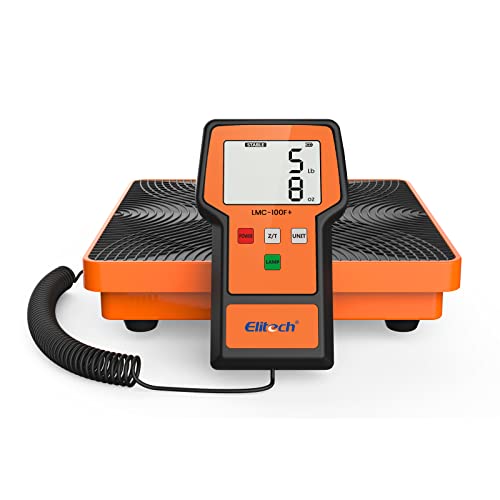 Elitech refrigerant scaleCharge tracking runs on the scale
Certification is the legal floor; these are the working instruments beside it. The full kit page.