Guide
Recovery requirements: the numbers on the 608 exam that matter in the truck
Short answer · Updated 2026
For small appliances, recovery equipment made before the late-1993 cutoff must recover 80 percent of the refrigerant; newer equipment must recover 90 percent with the compressor running or 80 percent with it not running; or you can evacuate to 4 inches of mercury vacuum. System-dependent equipment is limited to appliances with 15 pounds or less, and MVACs being scrapped must be pulled to 102 mm of mercury vacuum (40 CFR 82.156).
The recovery numbers the exam tests
| Situation | Requirement | Rule |
|---|---|---|
| Small appliance, older recovery equipment | Recover 80 percent | 40 CFR 82.156(b) |
| Small appliance, newer equipment, compressor working | Recover 90 percent | 40 CFR 82.156(b) |
| Small appliance, newer equipment, compressor not working | Recover 80 percent | 40 CFR 82.156(b) |
| Small appliance, any equipment | Or evacuate to 4 inches of mercury vacuum | 40 CFR 82.156(b) |
| System-dependent recovery equipment | Only on appliances with a full charge of 15 lb or less, unless a permanent pump-out unit | 40 CFR 82.156(e) |
| MVAC or MVAC-like appliance for disposal | Reduce to 102 mm of mercury vacuum or follow Subpart B | 40 CFR 82.156(c), (d) |
| Other appliances | Evacuate to the levels in Table 1 with certified equipment | 40 CFR 82.156(a) |
Recovery is the working heart of Section 608. The venting prohibition tells you what you cannot do with refrigerant, and the recovery requirements tell you what you must do instead: capture it, to a defined standard, before an appliance is opened or scrapped. The standards are expressed as numbers, and the numbers are the most heavily tested material in the small appliance portion of the exam because they encode real decisions a technician makes at a real machine. How much refrigerant must come out. What changes when the compressor is dead. What counts as good enough when a percentage cannot be measured. And what standard applies when the appliance is not a kitchen refrigerator but a vehicle at a scrapyard.
This guide covers the small appliance recovery requirements and the logic behind them: the 80 and 90 percent split and why the condition of the compressor moves the number, the four inches of mercury vacuum alternative, the 102 mm of mercury figure for motor vehicle air conditioning disposal, and the distinction between self-contained and system-dependent recovery equipment that the exam returns to again and again. None of this is presented as a service procedure. It is the regulatory floor and the reasoning that makes it memorable, which is exactly the altitude the exam tests at.
What counts as a small appliance
The recovery numbers in this guide belong to small appliances, so the definition comes first. A small appliance is a product manufactured, charged, and hermetically sealed in a factory with 5 pounds or less of refrigerant. Household refrigerators and freezers, window air conditioning units, dehumidifiers, and similar factory sealed products live here. This is also the equipment class covered by Type I certification, which is why the recovery percentages below are core Type I exam material.
Every word in the definition is testable. The charge limit is 5 pounds or less. The unit is factory charged and hermetically sealed. A system assembled and charged in the field is not a small appliance no matter how little refrigerant it holds, because it was not sealed at a factory. Exam writers like to build wrong answers out of definitions that are almost right, and a field charged system described as a small appliance is one of their favorite constructions.
The 80 and 90 percent split
When refrigerant is recovered from a small appliance using recovery equipment, the required recovery percentage depends on two things: the vintage of the recovery equipment and whether the appliance's compressor works. Recovery equipment manufactured before the regulation's cutoff date late in 1993 must recover 80 percent of the refrigerant in the appliance. Recovery equipment manufactured on or after that date must recover 90 percent when the compressor of the appliance is operating, and 80 percent when the compressor is not operating.
| Recovery equipment vintage | Appliance compressor condition | Required recovery |
|---|---|---|
| Manufactured before the late-1993 cutoff | Any condition | 80 percent of the refrigerant |
| Manufactured on or after the late-1993 cutoff | Compressor operating | 90 percent of the refrigerant |
| Manufactured on or after the late-1993 cutoff | Compressor not operating | 80 percent of the refrigerant |
The cutoff late in 1993 is the dividing line because that is when equipment certification requirements changed, and the regulation did not pretend that older recovery machines could suddenly meet a standard they were never built for. Older equipment carries the 80 percent requirement across the board. Newer equipment is held to 90 percent, but only when the appliance itself can help, which brings us to the compressor.
Why the compressor condition changes the number
The 90 versus 80 split on modern equipment is not an arbitrary discount for broken machines. It reflects what is physically happening inside a sealed system during recovery. Refrigerant in a small appliance does not sit conveniently in one place as a gas waiting to be drawn out. A meaningful portion of it is dissolved in the compressor's lubricating oil and settled in the low spots of the circuit. A compressor that can run helps liberate that refrigerant: running the appliance warms the oil and moves refrigerant through the circuit, so more of the charge is actually available to the recovery machine as vapor that can be captured.
When the compressor is dead, that assistance is gone. Refrigerant stays dissolved in cold oil and trapped in the low points, and no recovery machine on the outside of a hermetically sealed system can coax all of it out. The regulation acknowledges the physics: with a working compressor the standard is 90 percent, and without one it drops to 80 percent. The number tracks what competent recovery can realistically achieve, not what a perfect laboratory could.
This reasoning is worth carrying into the exam room because it converts a memorization item into a derivation. If you remember only that a dead compressor makes recovery harder, you can reconstruct which situation gets 90 and which gets 80. The exam question that presents a small appliance with a burned out compressor and asks for the required recovery percentage is testing exactly this: candidates who memorized 90 without the condition attached will pick the wrong answer, and candidates who understand why the compressor matters will not.
The four inches of mercury alternative
Percentages have an obvious practical problem: at a machine in the field, nobody can directly measure what percentage of an unknown remaining charge has been captured. So the regulation provides an alternative standard expressed in something a technician can actually read. Instead of recovering 80 or 90 percent, the requirement can be satisfied by evacuating the small appliance to four inches of mercury vacuum.
Four inches of mercury vacuum is a modest vacuum, well short of the deep vacuums used elsewhere in refrigeration work, and that is the point. It is a level chosen to demonstrate that the recoverable refrigerant has been captured from a small sealed system, achievable with certified recovery equipment in reasonable time. On a gauge, it is an observable, recordable endpoint. The regulation is giving the technician a choice of two ways to prove the same thing: hit the percentage, or hit the vacuum.
For the exam, hold on to the word or. The percentage standard and the four inches of mercury standard are alternatives, and either satisfies the requirement. A question may present a scenario where the technician evacuated to four inches of mercury and ask whether the requirement was met, with a distractor implying the percentage also had to be verified. It did not. One standard or the other, not both.
Keep the vacuums straight
Four inches of mercury is the small appliance evacuation alternative. The 102 mm of mercury figure belongs to motor vehicle air conditioner disposal. The exam counts on candidates blurring the two, so file them under different headings now: inches with small appliances, millimeters with MVAC disposal.
MVAC disposal and the 102 mm figure
Motor vehicle air conditioners occupy their own corner of the rules, and the corner the 608 exam cares about is disposal. When a motor vehicle air conditioner, or an MVAC-like appliance such as the cab air conditioning on a tractor, is being disposed of, the requirement is to reduce the system to or below 102 mm of mercury vacuum, or to handle the refrigerant under the rules that govern motor vehicle air conditioning work. As with the small appliance standards, the structure is a choice between a measurable endpoint and an alternative compliance path.
Why does a 608 exam ask about vehicles at all? Because appliances and vehicles meet at the end of life. Scrap yards, salvage operations, and appliance recyclers deal with refrigerant circuits from both worlds, and the disposal rules are written so that a vehicle air conditioner headed for the shredder does not become a venting event simply because it fell between two regulatory programs. The 102 mm of mercury figure is the disposal standard a 608 candidate is expected to recognize.
The testable content here is deliberately narrow. Know the number, know that it attaches to motor vehicle air conditioner disposal, and know that following the motor vehicle rules is the alternative path. Resist the urge to import more detail than the exam asks for. The question pattern is recognition, not vehicle service knowledge.
Everything else: the Table 1 evacuation levels
Small appliances, MVACs and MVAC-like appliances are the exceptions. Every other appliance is governed by Table 1 in 82.156, which sets the vacuum a technician must reach before opening the appliance or disposing of it, using a recovery machine certified under 82.158. The table is organized by pressure class and charge size, with one column for recovery equipment made before the late-1993 cutoff and one for equipment made on or after it. Older study material sometimes prints a version of this table keyed to HCFC-22; the current text does not name any refrigerant, only pressure classes.
| Appliance | Older recovery equipment | Recovery equipment made on or after the late-1993 cutoff |
|---|---|---|
| Very high-pressure appliance | 0 inches Hg vacuum | 0 inches Hg vacuum |
| High-pressure appliance, full charge under 200 pounds | 0 inches Hg vacuum | 0 inches Hg vacuum |
| High-pressure appliance, full charge of 200 pounds or more | 4 inches Hg vacuum | 10 inches Hg vacuum |
| Medium-pressure appliance, full charge under 200 pounds | 4 inches Hg vacuum | 10 inches Hg vacuum |
| Medium-pressure appliance, full charge of 200 pounds or more | 4 inches Hg vacuum | 15 inches Hg vacuum |
| Low-pressure appliance | 25 mm Hg absolute | 25 mm Hg absolute |
Two relief valves sit under the table. If the repair is not major as the regulation defines it and the appliance will not be evacuated to the atmosphere afterward, a medium-, high- or very high-pressure appliance may instead be taken to no higher than 0 psig before opening, and a low-pressure appliance may be pressurized to no higher than 0 psig, with oil changes allowed at up to 5 psig. And where leaks make the Table 1 level unattainable, the technician isolates the leaking components, evacuates the sound ones to the table level, and takes the leaking ones as low as possible without contaminating the refrigerant, never above 0 psig. Low-pressure appliances deserve one extra note: their figure is 25 mm of mercury absolute, a near-total vacuum, not 25 inches of mercury vacuum, and the two are very different numbers.
Self-contained versus system-dependent recovery equipment
The equipment side of recovery has its own tested distinction. Recovery equipment comes in two kinds. Self-contained equipment has its own means of moving refrigerant: it can pull refrigerant out of an appliance under its own power, without any help from the appliance it is servicing. System-dependent equipment has no independent means of moving refrigerant and relies on the appliance's own components, most importantly its compressor, or on pressure differences the system itself provides, to push the charge into a recovery container.
The distinction matters because it decides what a given piece of equipment can honestly accomplish. A system-dependent device is at the mercy of the appliance. If the appliance's compressor is dead and the system holds no useful pressure, a system-dependent device has nothing to work with. Self-contained equipment brings its own capability and does not care whether the appliance can participate. That is the conceptual line the exam draws, and nearly every question about the two categories is a restatement of it.
Connect this back to the recovery percentages and the whole small appliance section snaps into one picture. The regulation sets performance standards that certified recovery equipment can meet, adjusts the standard when the appliance's compressor cannot assist, and distinguishes equipment that works alone from equipment that needs the appliance's help. Every number and every category in this guide is answering the same underlying question: what does it actually take to get the refrigerant out of a sealed system before that system is opened or scrapped.
How these become exam questions
The recovery material generates some of the most formulaic questions on the exam, which is good news for a prepared candidate. The variables are few: equipment vintage relative to the late-1993 cutoff, compressor working or not, percentage standard or vacuum alternative, self-contained or system-dependent, small appliance or MVAC disposal. Exam writers combine those variables into scenarios, and the combinations repeat.
- A small appliance with a working compressor, recovered with equipment made after the late-1993 cutoff: 90 percent is required.
- The same appliance with a dead compressor: the requirement drops to 80 percent.
- Recovery equipment manufactured before the late-1993 cutoff: 80 percent, regardless of the compressor.
- A technician evacuates a small appliance to four inches of mercury vacuum instead of measuring a percentage: the requirement is satisfied, because the standards are alternatives.
- A motor vehicle air conditioner at disposal: reduce to 102 mm of mercury vacuum or follow the motor vehicle rules.
- A recovery device that relies on the appliance's compressor to move refrigerant: system-dependent. One that moves refrigerant under its own power: self-contained.
Notice what is missing from that list: procedures. The exam does not ask how to connect equipment, in what order to operate anything, or how to handle refrigerant containers, and this guide has deliberately stayed at the same altitude. What the exam wants is the regulatory floor: the numbers, the conditions that select between them, and the categories of equipment. Train at that altitude and the recovery section becomes the most predictable part of the test.
Why the truck cares
These numbers are not trivia. The recovery standard decides when a small appliance is legally ready to be opened or scrapped, and the compressor condition decides which standard you are working to. A technician who knows the split cold makes the right call at the machine without guessing, and guessing at the machine is how venting violations happen.
Learn the definitions first, then the split, then the alternatives. Small appliance means factory sealed with 5 pounds or less. Eighty percent for old equipment always, 90 for new equipment with a working compressor, 80 when it is dead, or four inches of mercury as the alternative endpoint. And 102 mm of mercury when the appliance being disposed of is a vehicle's. Everything larger goes to Table 1, with 25 mm of mercury absolute for low-pressure machines. That handful of facts, held with the reasoning that generated them, covers the recovery ground the exam walks every single time.
Test yourself on the recovery numbers under exam conditions. Take a free 608 practice exam.
The 608 fact sheet, free
Every verified 608 number on one printable page: the four types, the exam structure, the leak-rate and recovery figures. Enter your email and we will send you straight to it.
No spam. One useful sheet and occasional notes.
Common questions
What percentage of refrigerant must be recovered from a small appliance?
90 percent if your recovery equipment was made after the late-1993 cutoff and the appliance compressor works, and 80 percent if the compressor does not work or the equipment is older. Alternatively, evacuate the appliance to 4 inches of mercury vacuum.
Why does the compressor matter for recovery?
A working compressor helps push refrigerant out of the system, so more of it can be captured. With a dead compressor, refrigerant stays trapped in the oil and the low side, so the regulation accepts 80 percent instead of 90. Heating and tapping the compressor housing helps release it.
What is the difference between recovery, recycling and reclamation?
Recovery removes refrigerant into an external container. Recycling cleans it for reuse, typically in the same owner equipment. Reclamation reprocesses it to the AHRI 700 purity specification and verifies it by laboratory analysis, which is required before it is sold to a new owner.
Sources
- Recovery and evacuation requirements: 40 CFR 82.156.
- Recovery equipment certification: 40 CFR 82.158.
- Definitions of recovery, recycling and reclamation: 40 CFR 82.152.
Keep reading
- The 608 leak rates: 10, 20, 30 and the 125 that gets EPA's attention
- Type I, II, III or Universal: which 608 certification do you actually need
- How hard is the EPA 608 exam
The companion books
The tools of the certified tech
 Elitech digital manifold setThe gauge set is the trade's daily instrument
 VIVOHOME 4CFM vacuum pumpEvacuation is half of what 608 regulates
 VEVOR recovery machineRecovery is the other half
 Fieldpiece DR58 leak detectorLeak detection is a Group II exam area
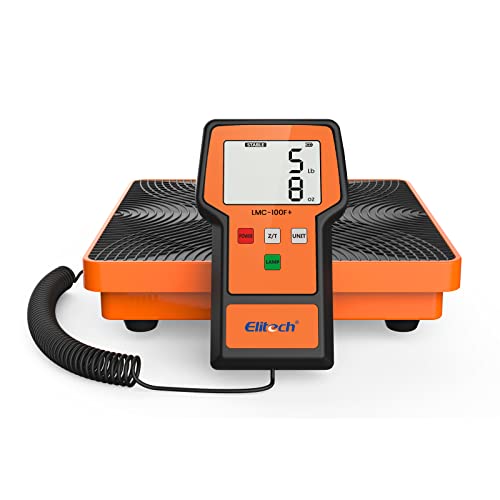 Elitech refrigerant scaleCharge tracking runs on the scale
Certification is the legal floor; these are the working instruments beside it. The full kit page.