Guide
How hard is the EPA 608 exam
Short answer · Updated 2026
The EPA 608 exam is moderately hard: fair and bounded, but closed-book. Each type test is 25 Core questions plus 25 on that equipment type, and Universal is 100 questions, with a 70 percent pass mark (35 of 50, or 70 of 100). It needs no field experience, but it does need real study, because the Core half is regulation and environmental material that daily work never teaches.
EPA 608 exam at a glance
| Test | Questions | Pass mark | Format |
|---|---|---|---|
| Type I (small appliances) | 50 (25 Core + 25 Type I) | 70 percent proctored, 84 percent mail-in | Proctored or mail-in |
| Type II (medium and high pressure) | 50 (25 Core + 25 Type II) | 70 percent | Closed-book, proctored |
| Type III (low pressure) | 50 (25 Core + 25 Type III) | 70 percent | Closed-book, proctored |
| Universal | 100 (25 Core + 75 across Types I, II, III) | 70 percent | Closed-book, proctored |
Ask three techs how hard the EPA 608 exam is and you will get three different answers, mostly because each of them walked in with different preparation. The honest answer starts from the one thing that is fixed for everybody: the structure of the exam itself, which is published in Appendix D of 40 CFR Part 82. The number of questions, the topics, the passing score and the testing conditions are all set by regulation, not by the certifying organization, so we can assess the difficulty from the blueprint instead of from rumor.
Here is the short version before the detail: the 608 exam is a fair test of a defined body of knowledge. It is not a trick, it is not an engineering qualifier, and it does not require field experience to pass, though experience helps. What it does require is real study, because the exam is closed-book and a meaningful share of the material is regulatory and environmental content that even experienced techs have never had to articulate. Respect it, prepare for it deliberately, and it is very beatable. Wing it, and the closed-book format will find the gaps.
What the structure tells you
Every Type exam has the same shape: 25 Core questions, which the regulation calls Group I, plus 25 questions specific to the equipment sector, called Group II. That is 50 questions for a single type. The Universal exam is 100 questions in one sitting: the same 25 Core plus 25 questions for each of the three types. There is no essay, no practical station, no oral board. It is a fixed-length knowledge test with a published topic list.
That shape has two consequences for difficulty. First, the exam is bounded: the topics are enumerated in the regulation, so there is no infinite syllabus to fear. You can know, before you open a study guide, essentially what the test is allowed to ask about. Second, the 25 plus 25 split means half of a single-type exam is material that has nothing to do with your daily tools and everything to do with refrigerant policy, science and law. Techs who prepare only for the hands-on material routinely get surprised by the half of the test that is not about hands-on work.
For Universal candidates the math shifts but the lesson holds. Out of 100 questions, 25 are Core and 75 are sector material spread across three equipment classes, at least one of which you probably have never worked. The Universal exam is not harder question by question; it is simply wider, and the width is exactly why it rewards a structured study plan over cramming.
The 70 percent bar in real terms
The passing score on the closed-book proctored exams is 70 percent. That is a deliberate, reasonable bar: high enough that guessing and vague familiarity will not clear it, low enough that you do not need mastery of every corner of the material. You are allowed to have weak spots and still pass. What you are not allowed to have is whole regions of the syllabus you never looked at, because the exam samples across the published topics and a blank region bleeds points fast.
One practical note on scoring: do not assume anything about how the sections combine or whether each section must be cleared on its own. Scoring administration runs through your EPA-approved certifying organization, so ask the program you register with exactly how your exam is scored and reported. The regulation fixes the bar at 70 percent for the closed-book proctored formats; your program can tell you precisely how that bar is applied to the sections of the exam you sit.
It is also worth knowing the deadlines on the other side of the desk: programs are required to deliver results within 30 days and your wallet card within 30 days. So the exam is not just bounded in content, it is bounded in process. You prepare, you sit, and inside a defined window you know where you stand.
What the Core actually tests
The Core section covers three territories set out in the regulation: the environmental impact of CFCs, HCFCs and their substitutes, the laws and regulations governing refrigerant handling, and the changing outlook of the industry as older refrigerants give way to newer ones. Read that list again, because it explains most of the surprise factor in this exam. None of those topics live in your tool bag. They live in the reasoning behind the rules you work under.
Expect the environmental material to test whether you understand why these refrigerants are regulated at all: what the compounds do once released, how substitutes differ, and why the distinction between refrigerant families matters. Expect the legal material to test the rules that bind you personally: certification requirements, the venting prohibition and its narrow de minimis exception for releases during good-faith recovery, and the recordkeeping the regulation imposes, with leak-repair records kept at least three years and owners of appliances holding 50 or more pounds of an ozone-depleting refrigerant keeping a record of every service. Expect the industry-outlook material to test whether you understand that the refrigerant landscape is moving and your practices have to move with it.
For a working tech, this is the section that punishes overconfidence. You can be excellent with a torch and a recovery machine and still have never needed to explain the regulatory reasoning out loud. For a newcomer, the Core is oddly good news: it is pure study material, equally available to everyone, and field veterans hold no advantage over you on it. Either way, treat the Core as a real subject, not a warm-up.
What the sector sections actually test
The Group II sections cover leak detection, recovery techniques, safety, shipping and disposal, applied to the equipment class of each type. This is the half of the exam that connects to physical work: how you find where refrigerant is escaping, how you get refrigerant out of a system properly, how you protect yourself while doing it, and what happens to the refrigerant and the equipment afterward, all the way through transport and disposal.
If you have field experience in the relevant class, this material will feel familiar, but familiarity is not the same as being able to answer precise questions about it. The exam asks about procedures and requirements in specific terms, and the closed-book rule means the specifics have to be memorized, not looked up. If you lack field experience, the sector sections are learnable from study alone, but give them genuine time. Understanding why a recovery step exists makes its details stick far better than memorizing the step cold.
Universal candidates should note where their unfamiliar territory lies. Most people sitting Universal have some exposure to one equipment class and little or none to another. The low-pressure material is the usual stranger. Budget your study time by unfamiliarity, not by the order the book presents things, and the wide exam narrows quickly.
Why closed-book makes vocabulary the real work
The single biggest driver of difficulty is not any topic on the list. It is the testing condition: Type II, Type III and Universal exams are closed-book and proctored, and the standard Type I path is the same. Closed-book changes what studying means. In the field, half of competence is knowing where to look something up. In the exam room there is no looking up, so the terminology, the categories and the reasoning have to already be yours.
This is why candidates who skim a study guide and feel like they recognize everything still fail. Recognition is not recall. The exam asks you to produce distinctions from memory: which refrigerant family, which equipment class, which requirement, which procedure. The fix is equally plain: study actively rather than passively. Quiz yourself, explain concepts out loud, write definitions from memory, and drill practice questions under closed-book conditions until recall is automatic. Every hour of active practice is worth several hours of rereading.
The vocabulary deserves special mention. The regulation and the exam speak a precise language: appliance classes, refrigerant families, recovery, recapture, de minimis, certification types. If a term on a practice question makes you hesitate, that hesitation is a flag. On a 50 or 100 question test at a 70 percent bar, a handful of vocabulary stumbles is survivable; a systematic vocabulary gap is not.
A study approach that fits the exam
Because the exam structure is fixed and published, the study plan almost writes itself. Work in phases, in order, and let the structure of the exam dictate the structure of your preparation rather than paging through a guide front to back and hoping coverage happens by accident.
- Phase one, the Core: learn the environmental science of CFCs, HCFCs and substitutes, the legal framework including the venting prohibition and recordkeeping, and the industry outlook. This material appears on every exam, so it is the highest-value study time you have.
- Phase two, your sector or sectors: work through leak detection, recovery techniques, safety, shipping and disposal for each type you are sitting. Universal candidates should spend the most time on their least familiar equipment class.
- Phase three, closed-book practice: drill exam-style questions with no notes and no answer key in view, exactly as you will sit the real test. Score yourself honestly against the 70 percent bar.
- Phase four, targeted repair: take every question you missed, trace it back to its topic, and restudy that topic specifically. Repeat the cycle until your practice scores sit comfortably above the bar, not barely at it.
How long this takes depends on where you start. A tech with years on the gauges is mostly closing the Core gap and sharpening terminology. A newcomer is building from the ground up and should plan real study across every phase. Either way, the finish line is the same and it is measurable: consistent closed-book practice scores with margin above 70 percent. Do not book the exam on hope. Book it when your own numbers say you are ready, and the sitting becomes a formality.
Two habits separate candidates who pass on the first sitting from candidates who do not. The first is honesty in scoring: grade your practice work against the real bar, count near misses as misses, and do not give yourself credit for answers you would have gotten with the book open. The second is spacing: several shorter study sessions spread across days beat one long session the night before, because the exam tests recall, and recall is built by returning to material after you have started to forget it. Neither habit costs anything. Both change outcomes.
The mail-in caveat
One format plays by a different rule. The regulation permits a mail-in exam for Type I only, and it sets the passing score for that format at 84 percent instead of the 70 percent required on closed-book proctored tests. If you are weighing the mail-in route because it looks easier, look at the number again: the bar rises by fourteen points. The format is more convenient; the standard is stiffer.
The practical read is this: prepare for a mail-in Type I to at least the same depth you would for a proctored exam, because the score you must produce is higher. And if your plans include any equipment beyond small appliances, the mail-in question answers itself: Type II, Type III and Universal have no mail-in option, so you will be sitting a proctored exam anyway, and it might as well be the one that covers your whole career.
So how hard is it, really
Hard is the wrong axis. The 608 exam is demanding in a specific, predictable way: it requires you to hold a bounded, published body of knowledge in your head and produce it under closed-book conditions to a 70 percent standard, or 84 percent by mail for Type I. Nothing about that is unfair and nothing about it is trivial. People fail when they mistake field competence for exam readiness or mistake reading for studying. People pass, comfortably, when they work the material in phases and practice under real conditions.
There is one more reason to prepare properly rather than minimally: under the regulation, technician certification does not expire. There is no renewal requirement and no retest cycle in the rule, only a reserved right for EPA to add one by future notice, so the understanding you build for this exam is understanding you carry for an entire career of legal, professional refrigerant work. Confirm anything you hear about renewal with your certifying program, study like the credential is permanent, because it is, and go take the test.
Find out if you would pass today. Take the practice exam.
The 608 fact sheet, free
Every verified 608 number on one printable page: the four types, the exam structure, the leak-rate and recovery figures. Enter your email and we will send you straight to it.
No spam. One useful sheet and occasional notes.
Common questions
How many questions can you miss on the EPA 608 exam?
At a 70 percent pass mark you can miss 15 of 50 on a single type test, or 30 of 100 on Universal, if the test is scored as a whole. Many certifying programs score each 25-question section separately, which means passing each section with at least 18 of 25, so confirm the scoring with your program before you sit.
Which EPA 608 section is the hardest?
Most candidates find Core the trickiest, because it is regulation, dates and environmental chemistry rather than hands-on knowledge. Type III is often hardest for residential techs, since few have worked on low-pressure chillers. Type I is usually considered the easiest.
Is the EPA 608 exam open book?
No for Type II, Type III and Universal, which are closed-book and proctored. Type I may be taken by mail-in, but the mail-in format requires 84 percent to pass, and a Type I taken toward Universal is closed-book.
Sources
- Test structure, closed-book rule and passing scores: 40 CFR Part 82, Subpart F, Appendix D.
- Certification types: 40 CFR 82.161.
Keep reading
- How to get EPA 608 certified
- Type I, II, III or Universal: which 608 certification do you actually need
- Type I certification: the small-appliance card
- Type II certification: the split-system world
- Universal certification: one exam, the whole trade
The companion books
The tools of the certified tech
 Elitech digital manifold setThe gauge set is the trade's daily instrument
 VIVOHOME 4CFM vacuum pumpEvacuation is half of what 608 regulates
 VEVOR recovery machineRecovery is the other half
 Fieldpiece DR58 leak detectorLeak detection is a Group II exam area
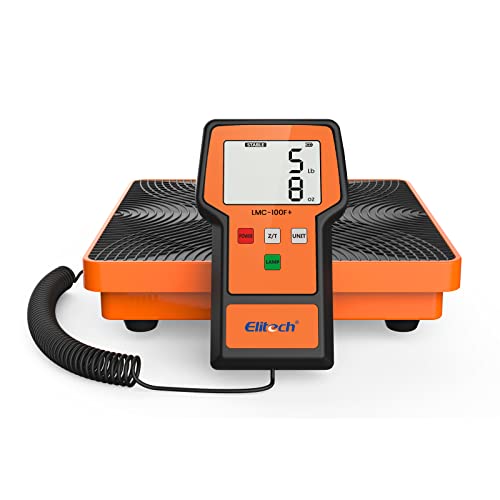 Elitech refrigerant scaleCharge tracking runs on the scale
Certification is the legal floor; these are the working instruments beside it. The full kit page.