Guide
Type I certification: the small-appliance card
A complete guide to EPA 608 Type I certification: what small appliance legally means, who the credential genuinely fits, the mail-in trade-off, and what the exam tests.
Type I is the narrowest of the EPA Section 608 certifications, and it is also the most misunderstood. Because it covers the smallest equipment and offers the only mail-in exam format, it gets treated as the easy door into the trade, a starter credential you grab now and outgrow later. That framing gets the credential wrong in both directions. For the right technician, Type I is not a stepping stone at all; it is the complete and sufficient card for a real category of work, held for a career without apology. For the wrong technician, it is a detour that costs a second exam registration and a second study cycle within a year or two. The difference between those outcomes is not effort or talent. It is whether your work genuinely lives inside the small-appliance class, and that is a question you can answer before you register for anything.
This guide takes Type I seriously on its own terms. We will walk through who the credential actually fits, what the regulation means when it says small appliance, because the legal definition is tighter than the everyday phrase, the honest arithmetic of the mail-in option, what the Type I section of the exam tests conceptually, and finally why so many candidates who start out asking about Type I end up sitting the Universal exam instead. Everything here traces back to 40 CFR Part 82, the federal regulation that creates the certification, defines the equipment classes, and fixes the exam structure. By the end you should know not just what Type I is, but whether it is yours.
Who Type I actually fits
Start with the appliance repair technician. If your sealed-system work is domestic refrigeration, the household refrigerators and freezers that arrive from the factory charged and welded shut, Type I maps onto your work almost perfectly. The regulation requires certification for anyone whose work could reasonably be expected to violate the integrity of the refrigerant circuit, and on a domestic refrigerator that means the tech recovering refrigerant ahead of a compressor replacement or a disposal. That is squarely Type I territory, and an appliance repair career can stay inside it indefinitely. The appliance trade is its own world, with its own customers and its own rhythm, and it does not inevitably drift toward split systems the way general HVAC work does.
Property maintenance is the second natural home for the credential. A maintenance tech at an apartment complex, a hotel, or a portfolio of rental properties deals constantly with window air conditioning units, small refrigerators, and similar factory-sealed equipment. Most of that work never touches the refrigerant circuit, and the tasks that stay outside the circuit require no certification at all. The moment the role includes repair work that opens the circuit, recovering the charge from a window unit ahead of a compressor swap, for instance, the technician definition is triggered, and Type I is the certification that covers the act. Disposal is the one thing the definition leaves out: the regulation says persons who only dispose of small appliances are not required to be certified, so recovering the charge from a dead window unit before it goes in the dumpster does not by itself need a card, though the recovery levels and the certified-equipment rule still apply. For a maintenance department, putting Type I cards in the hands of the staff who repair small appliances is often exactly the right amount of certification, no more and no less.
There is a third group people ask about: the recovery and disposal side of the trade. Small appliances reach the end of their lives in enormous numbers, and the regulation does not allow the refrigerant inside them to ride to the scrapyard unrecovered. But the certification rule is narrower than most guides admit. Under 82.161, persons who dispose of small appliances, MVACs and MVAC-like appliances are not required to be certified, and the technician definition itself excludes disposal of those three classes. What the recycler, the scrap operation and the retailer taking back old units are bound by is the disposal rule instead: the charge must be recovered to the small-appliance levels with certified equipment, and the final processor must either recover any remaining refrigerant or hold a signed statement or contract verifying that it was recovered, kept for three years. Type I enters that world only when the same people also repair the units.
The honest test for all three groups is the same: is the work bounded, and will it stay bounded? Type I permits you to open the refrigerant circuit on small appliances and nothing else. A split system is outside your card. A packaged rooftop unit is outside your card. A walk-in cooler is outside your card. If you can look at your work, present and near future, and say with confidence that it lives entirely inside the small-appliance class, Type I is a legitimate answer. If you cannot say that with confidence, keep reading, because the last section of this guide is for you.
What small appliance legally means
The everyday phrase small appliance is loose. The regulatory definition is not. Under 40 CFR Part 82, a small appliance is a unit that is fully manufactured, charged and hermetically sealed in a factory, and that contains five pounds or less of refrigerant. Both conditions have to hold. The regulation's own list runs from household and commercial refrigerators and freezers through room air conditioners, including window units, portables and packaged terminal heat pumps, to dehumidifiers, under-the-counter ice makers, vending machines and drinking water coolers. The factory seal is a statement about how the appliance was built: the refrigerant circuit was closed at the factory and was never meant to be opened, charged or assembled in the field. The five-pound line is a statement about how much refrigerant the sealed circuit holds. An appliance that meets one test but fails the other is not a small appliance, no matter what it looks like or where it sits.
The units that live comfortably inside the definition are the ones you would guess: household refrigerators and freezers, window air conditioning units, dehumidifiers, and similar sealed systems built and charged on a production line. What trips people up is the equipment near the boundary. A field-assembled system is outside the definition even if its charge is tiny, because it was not factory-sealed. A factory-built unit holding more than five pounds is outside the definition even though it never sees a brazing torch in the field. When you are unsure, the questions to ask are always the same two: was the circuit sealed at the factory, and does it hold five pounds or less? The answers come from how the appliance was built, not from its size on the shelf or the room it lives in.
Classification is construction, not location
A small appliance is defined by factory-sealed construction and a charge of five pounds or less. The building it sits in, the business it serves, and the name on the work order have nothing to do with the classification. A sealed five-pound unit in a commercial kitchen is still a small appliance; a field-assembled system in a house is not.
Why does the definition matter so much? Because it draws the boundary of your card. Type I certification permits sealed-system work on small appliances as the regulation defines them, and the definition is what an inspector, an employer, or a certifying program will apply. Learning the definition cold, both halves of it, is also plainly good exam preparation, since the Type I section of the test is built around this equipment class and expects you to know exactly where it begins and ends.
The mail-in option and its honest trade-off
Type I is the only certification level with a mail-in exam format. Type II, Type III and Universal are closed-book, proctored exams with no alternative path. For Type I you have a genuine choice: sit a proctored exam through an EPA-approved certifying organization, or take the mail-in format. The existence of the choice is convenient. The terms of the choice deserve a clear-eyed look before you take it, because the mail-in route carries two costs that the convenience conceals.
The first cost is the passing score. The closed-book proctored exam passes at 70 percent. The mail-in format passes at 84 percent. That is the deal the regulation offers: an open format in exchange for a much stiffer bar. Fourteen points is not a rounding error on a 50-question exam. It shrinks your margin for error dramatically, and it means the preparation you can get away with for a proctored sitting is not necessarily enough for the mail-in version. Candidates who choose mail-in because it feels easier have the arithmetic exactly backwards: the format is easier, the standard is harder.
The second cost is the one almost nobody mentions: a mail-in Type I pass cannot count toward Universal certification. Universal can be earned in a single 100-question sitting, or it can be assembled by combining passing type exams. The mail-in format is excluded from that combining path. So a technician who takes mail-in Type I today and decides next year to build toward Universal gets no credit for the mail-in pass. The Type I material has to be sat again under proctored conditions. If there is any realistic chance your career expands beyond small appliances, the mail-in route is not a first step toward anything; it is a step that will be retraced.
So who does mail-in genuinely serve? The technician for whom Type I is truly the ceiling, for whom a proctored sitting is genuinely impractical to reach, and who is prepared to study to an 84 percent standard. That is a real person, and the format exists for them. If you are that person, prepare at least as hard as you would for a proctored exam, because the score you must produce is higher. If you are not that person, sit the proctored test at 70 percent, and keep your pass eligible to combine toward Universal later.
What the Type I exam tests
The exam structure is fixed by the regulation and shared across every type: 25 Core questions plus 25 questions specific to the type, 50 questions in total. The Core is the same section every 608 candidate faces regardless of type. It covers the environmental impact of CFCs, HCFCs and their substitutes, the laws and regulations that govern refrigerant work, and the changing outlook of an industry in which older refrigerants are being phased down and replaced. None of that is small-appliance material, and that is the point: the Core is the shared foundation the regulation expects every certified technician to hold.
Inside the Core, expect the legal material to press on the rules that bind you personally. The venting prohibition is the centerpiece: knowingly releasing regulated refrigerant while maintaining, servicing, repairing or disposing of equipment is prohibited, with a narrow exception for de minimis releases that occur during a good-faith effort to recover the refrigerant, and a short list of exempt substitutes in named end-uses. Recordkeeping shows up too: leak repair records are kept for at least three years, and owners of appliances holding 50 or more pounds of an ozone-depleting refrigerant must keep a record of every service on that equipment. That last rule will never apply to a small appliance, which by definition holds five pounds or less, but it is Core material and every candidate is expected to know it.
The Type I section itself covers the working categories the regulation assigns to every sector: leak detection, recovery techniques, safety, shipping and disposal, all framed for the small-appliance class. Conceptually, this is the knowledge of what must happen to the refrigerant in a sealed unit from the moment a repair or a disposal is on the table: how escaping refrigerant is found, how refrigerant is captured rather than released, how the technician stays safe doing it, and what the rules require as the refrigerant and the appliance move on from the job. The exam tests the requirements and the reasoning, not your hands. It is a knowledge test, and it is learnable from study alone.
One area deserves special attention, because it is the most distinctive piece of Type I material: the recovery standards for small appliances. The regulation sets required recovery levels that depend on two things, the condition of the appliance compressor and the age of the recovery equipment, with a dividing date late in 1993. Equipment manufactured on or after that date must achieve 90 percent recovery when the appliance compressor operates, and 80 percent when it does not. Older equipment meets an 80 percent standard. In place of the percentage standard, evacuating the appliance to four inches of mercury vacuum also satisfies the rule. You do not need to practice any of this to pass; you need to know the standards, the conditions that select between them, and the reason the compressor condition matters at all, which is that a running compressor helps move refrigerant out of the system.
| Situation | Standard |
|---|---|
| Recovery equipment made on or after the late-1993 cutoff, compressor operating | 90 percent recovery |
| Recovery equipment made on or after the late-1993 cutoff, compressor not operating | 80 percent recovery |
| Recovery equipment made before the late-1993 cutoff | 80 percent recovery |
| Any small appliance, alternative to the percentages | Evacuation to four inches of mercury vacuum |
Study the table until the pattern is yours, because this is exactly the kind of precise, conditional material a closed-book exam loves. Notice that the late-1993 cutoff is the only date you need. The exam is not a history test; it is testing whether you know which standard applies in which situation, and whether you understand the alternative path through the vacuum requirement. If you can explain the table out loud without looking at it, you have this material where it needs to be.
Why many candidates skip straight to Universal
Now the question this guide has been building toward. Plenty of people research Type I, understand it perfectly, and then sit the Universal exam anyway. Their reasoning is worth hearing, because it is usually sound. The first piece is the shared Core. Every type exam includes the same 25 Core questions, so a candidate who sits Type I now and Type II later studies and answers that material twice. The incremental cost of a broader exam is only the additional sector material, and the Universal exam bundles all of it into one sitting of 100 questions: the 25 Core plus 25 for each of the three types. One study push, one exam day, no return trips.
The second piece is career drift, and it is the most predictable force in the trade. The appliance tech gets asked about the mini split. The maintenance role grows to include the packaged rooftop unit. The bounded job does not stay bounded, and the regulation is unforgiving about the boundary: Type I does not permit you to open the circuit on anything beyond small appliances, no matter how capable you are. Since certification under the regulation does not expire, the broader credential is a one-time cost that covers every future version of your job. Guessing narrow saves a little study now and costs a registration, a study cycle, and turned-down work later.
The third piece is the mail-in exclusion we covered above. A candidate tempted by the mail-in format who also suspects the career might widen faces the worst of both worlds: a higher passing bar today and no credit toward Universal tomorrow. Once that sinks in, the proctored Universal sitting starts to look like the simpler path, not the harder one. None of this makes Type I a mistake. It makes Type I a deliberate choice for a bounded role rather than a default for beginners, and the people best served by it are the ones who chose it knowing everything above.
Making the call
- Your sealed-system work is domestic refrigeration, window units and other factory-sealed appliances holding five pounds or less, and you are confident it stays there: Type I is honest and sufficient
- You only recover refrigerant from small appliances ahead of disposal for a property, retailer or recycler: no certification is required for disposal-only work, though the recovery levels and certified-equipment rules still apply; any repair on the same units needs Type I
- A proctored sitting is genuinely out of reach and Type I is truly your ceiling: the mail-in format exists for you, at 84 percent instead of 70, and it cannot count toward Universal
- Your role shows any sign of growing toward split systems, packaged equipment or larger circuits: sit a proctored exam, and strongly consider Universal
- You are unsure: the uncertainty is the answer, and it points at Universal
Whichever way you decide, decide on the equipment and not on the exam length. The Type I exam is 50 questions like any other single type, the material is bounded and published, and the credential does not expire under the regulation. If small appliances are your world, take the small-appliance card with confidence, learn the definition, the recovery standards and the Core cold, and carry a certification that fits your work exactly. That is what Type I is for.
See where you stand on the Type I material. Take a practice exam now.
The 608 fact sheet, free
Every verified 608 number on one printable page: the four types, the exam structure, the leak-rate and recovery figures. Enter your email and we will send you straight to it.
No spam. One useful sheet and occasional notes.
Keep reading
- How to get EPA 608 certified
- Type I, II, III or Universal: which 608 certification do you actually need
- Type II certification: the split-system world
- Universal certification: one exam, the whole trade
- How hard is the EPA 608 exam
The companion books
The tools of the certified tech
 Elitech digital manifold setThe gauge set is the trade's daily instrument
 VIVOHOME 4CFM vacuum pumpEvacuation is half of what 608 regulates
 VEVOR recovery machineRecovery is the other half
 Fieldpiece DR58 leak detectorLeak detection is a Group II exam area
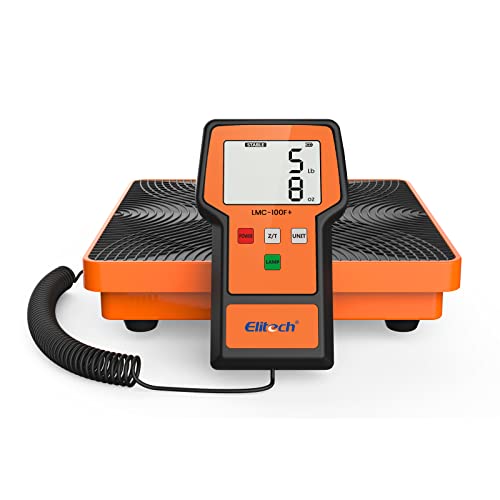 Elitech refrigerant scaleCharge tracking runs on the scale
Certification is the legal floor; these are the working instruments beside it. The full kit page.